Seven Women Who Built Islam: Reclaiming the Forgotten Legacies of the Prophet's Era
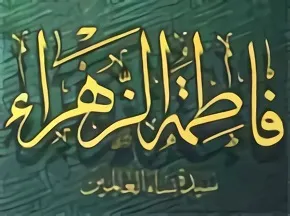
Photo: Salman01, Public domain, via Wikimedia Commons
The Women History Kept Trying to Sideline
Among the most persistent misconceptions circulating in certain corners of American Muslim youth culture is the idea that women in early Islamic history occupied peripheral roles — supportive presences in the background of a story primarily authored by men. This narrative is not only historically inaccurate; it is, in a meaningful sense, a form of erasure.
The women of the Prophet's era were not passive recipients of revelation. They were its guardians, its transmitters, and in many cases its most rigorous interpreters. They ran businesses, led armies, issued religious rulings, and challenged the Prophet ﷺ himself in matters of theology and governance. Their intellectual and spiritual contributions shaped the religion that over 3.5 million Americans practice today.
This is their story — or at least, seven chapters of it.
1. Khadijah bint Khuwaylid: The First Believer and the Foundation of Everything
Before there was a Muslim community, there was Khadijah. A widow, a merchant, and by every historical account a woman of formidable intelligence and commercial acumen, Khadijah ran one of the most successful trading enterprises in pre-Islamic Arabia. She employed the young Muhammad ﷺ and, observing his character, proposed marriage to him — an act of agency that directly contradicts the caricature of passive Muslim womanhood.
When revelation descended on the Prophet ﷺ in the Cave of Hira and he returned trembling with uncertainty, it was Khadijah who steadied him. Her response — "Allah will never humiliate you" — was not merely emotional comfort. It was a theological affirmation rooted in her own discernment of his character. She was the first Muslim, and her conversion was not incidental. It was the bedrock upon which the early community stood.
For young American Muslim women navigating professional ambition alongside religious identity, Khadijah's life is a direct refutation of the false choice between worldly achievement and spiritual depth.
2. Aisha bint Abi Bakr: The Scholar the Companions Consulted
No figure in early Islamic scholarship occupies a more consequential position than Aisha, the Prophet's wife and one of the most prolific hadith narrators in Islamic history. She transmitted over two thousand narrations, and the Companions — senior male scholars among them — regularly sought her clarification on matters of Islamic practice.
Her intellectual contributions extended beyond narration. She actively corrected misattributed hadith, challenged interpretations she believed were flawed, and engaged in juristic reasoning with a rigor that later scholars would cite as foundational. The renowned scholar al-Zuhri noted that if Aisha's knowledge were placed on one side of a scale and that of all other women on the other, hers would outweigh it.
For American Muslim students pursuing Islamic studies, Aisha's legacy is an invitation — not an anomaly.
3. Fatimah al-Zahra: Spiritual Integrity as Political Resistance
The Prophet's daughter Fatimah occupies a unique position in Islamic consciousness, revered across Sunni and Shia traditions alike. What is sometimes underemphasized in popular retellings is her active role in the political life of the early Muslim community following the Prophet's death.
Fatimah publicly contested the decision regarding the inheritance of Fadak, delivering an eloquent and theologically sophisticated speech that drew directly on Quranic reasoning. Whether one agrees with her position or not, the fact of her public advocacy — her willingness to stand before the Caliph and argue her case with scriptural precision — speaks to a tradition of principled Muslim female dissent that has deep roots.
4. Umm Salamah: The Counselor Who Changed the Course of History
At the pivotal moment following the Treaty of Hudaybiyyah, when the Prophet ﷺ instructed his companions to shave their heads and slaughter their animals — and they hesitated, paralyzed by disappointment — it was Umm Salamah who provided the strategic counsel that broke the impasse. She advised the Prophet to perform the acts himself first, without waiting for compliance. He did. The companions followed.
This single moment of political and psychological insight averted what could have been a catastrophic rupture in the early community. Umm Salamah was not merely a supportive spouse. She was a strategic advisor whose counsel shaped Islamic history at a critical juncture.
5. Nusaybah bint Ka'ab (Umm Umarah): The Warrior Who Protected the Prophet
At the Battle of Uhud, when the tide turned against the Muslim forces and many fled, Nusaybah bint Ka'ab remained on the battlefield — fighting, shielding the Prophet ﷺ with her own body, and sustaining multiple wounds in his defense. The Prophet later said he looked to his right and left during the battle and saw her there.
Her story disrupts any simplistic narrative about women's roles in early Islam being confined to the domestic sphere. She was a combatant, a protector, and a figure of extraordinary physical and moral courage.
6. Rufaydah al-Aslamiyyah: Islam's First Field Medic
Rufaydah al-Aslamiyyah is recognized by Islamic historians as establishing the first field hospital in Muslim military history — a tent she set up adjacent to the Prophet's mosque in Medina where she treated the wounded from multiple battles. She trained other women in medical care and operated with the Prophet's explicit approval.
In contemporary terms, she was a healthcare administrator, a medical educator, and a humanitarian first responder. Her legacy is a reminder that Islamic tradition has always honored those who serve the physical wellbeing of the community.
7. Zaynab bint Ali: Preserving the Narrative When It Mattered Most
In the aftermath of the tragedy of Karbala, it was Zaynab — granddaughter of the Prophet ﷺ — who ensured that the events were not buried in silence. Taken as a prisoner to the court of Yazid in Damascus, she delivered a speech of such power and eloquence that it transformed the political calculus of the moment and preserved the historical record for generations.
Her courage under captivity, her refusal to be silenced, and her insistence on bearing witness made her one of Islamic history's most important transmitters of truth in the face of power.
Reclaiming These Stories for the Next Generation
The women profiled here were not exceptional despite their faith — they were exceptional because of it. Islam, as practiced and modeled in the Prophet's community, did not suppress female intellectual and civic agency. It cultivated it.
For younger American Muslims — particularly women navigating questions of identity, ambition, and belonging — these seven figures are not distant historical curiosities. They are living proof that the Islamic tradition has always made room for women who lead, think, argue, heal, fight, and bear witness. The task for this generation is not to import that permission from outside the tradition. It has always been there.