One Faith, Many Paths: A Practical Guide to the Four Schools of Islamic Law for Muslims in America
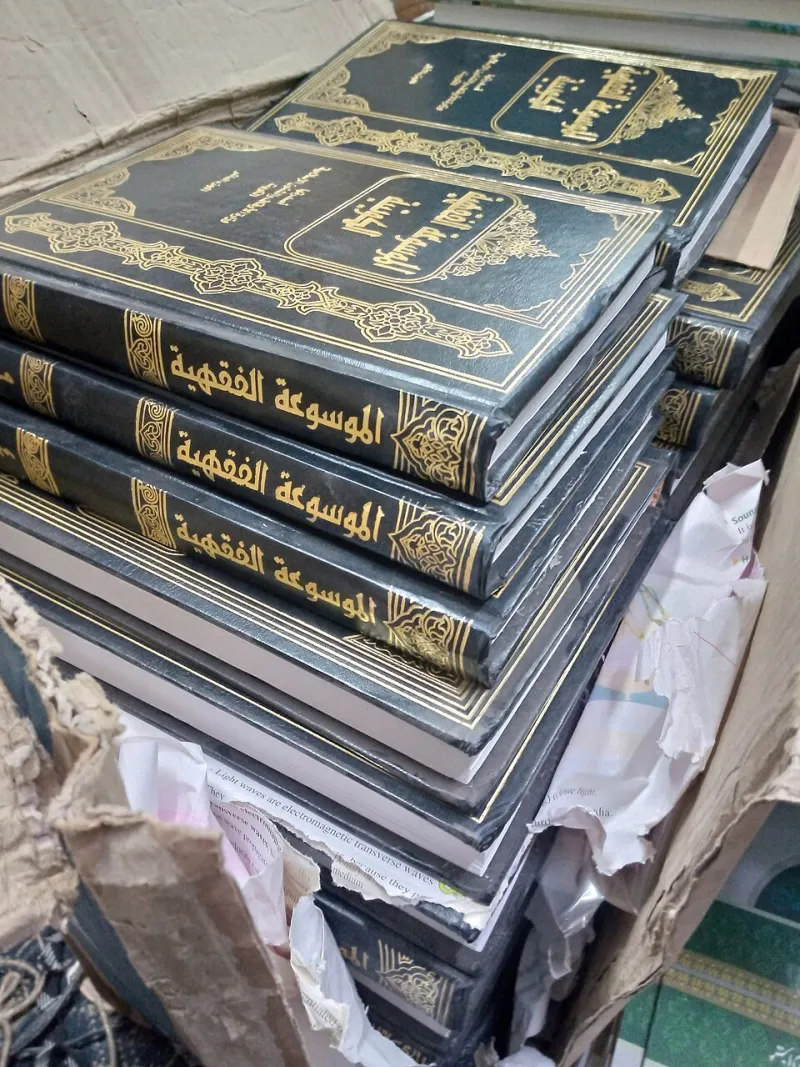
Photo: Ahm masum, CC BY-SA 4.0, via Wikimedia Commons
The Question That Confuses More Muslims Than It Should
Imagine attending Friday prayer at a Somali-led mosque in Minneapolis, then visiting a Pakistani community center in Chicago, then joining a West African congregation in Atlanta. The Quranic recitation is identical. The fundamental articles of faith are shared. And yet subtle differences in practice — the position of the hands during prayer, the method of ritual purification, the ruling on a particular food or financial transaction — may vary from one community to the next.
For many American Muslims, particularly those who grew up in households where a single practice was simply "the way Islam is done," encountering these differences can be disorienting. Some interpret divergence as error. Others conclude that Islamic law is arbitrary. Neither response is accurate.
What they are witnessing is the living legacy of the four major schools of Islamic jurisprudence — the madhabs — a tradition of rigorous legal scholarship that represents one of the most sophisticated intellectual achievements in human history.
What Is a Madhab, and Why Does It Exist?
The Arabic word madhab (plural: madhahib) translates roughly as "a path" or "a way of going." In the context of Islamic law, it refers to a systematic school of legal thought — a coherent methodology for deriving rulings from the Quran, the Sunnah (the Prophet's ﷺ practice and statements), scholarly consensus (ijma), and analogical reasoning (qiyas).
The four recognized Sunni schools — Hanafi, Maliki, Shafi'i, and Hanbali — did not emerge from theological disagreement about the fundamentals of Islam. All four schools share identical aqeedah (creed) regarding the oneness of Allah, prophethood, and the articles of faith. Their differences lie exclusively in the domain of fiqh — the practical application of Islamic law to human conduct — and even there, the areas of agreement vastly outnumber the areas of divergence.
The schools emerged organically in the second and third centuries of the Islamic calendar as the Muslim community expanded geographically and encountered new circumstances that required legal guidance. Different scholars, working in different cities with access to different collections of hadith and applying different methodological priorities, arrived at varying conclusions on specific matters. Over time, these approaches were systematized into the four schools that have endured to the present day.
The Hanafi School: Logic, Context, and the Breadth of Reason
Founded by Imam Abu Hanifah al-Nu'man ibn Thabit (699–767 CE) in Kufa, Iraq, the Hanafi school is the most widely followed madhab in the world today. It predominates across South Asia — Pakistan, India, Bangladesh — as well as Turkey, Central Asia, and much of the Arab world. In the United States, the majority of South Asian Muslim communities follow the Hanafi school.
Imam Abu Hanifah was renowned for his expansive use of ra'y (reasoned opinion) and qiyas (analogical reasoning) in deriving legal rulings. Working in cosmopolitan Kufa, a city of considerable intellectual diversity, he frequently encountered scenarios not directly addressed by existing hadith and developed a rigorous methodology for addressing them through principled reasoning.
The Hanafi school is often characterized as the most accommodating to local custom (urf) and contextual reasoning, which has historically made it well-suited for Muslim communities navigating diverse social environments — including, notably, the contemporary American context.
For American Muslims: Many questions about Islamic finance, business ethics, and civic participation have been addressed by contemporary Hanafi scholars drawing on this tradition of contextual reasoning.
The Maliki School: The Living Practice of Medina
Imam Malik ibn Anas (711–795 CE) of Medina established the second major school, and his approach is distinguished by a distinctive source of legal authority: the amal ahl al-Madinah — the living practice of the people of Medina. Imam Malik reasoned that Medina, as the city of the Prophet ﷺ, preserved an unbroken chain of communal practice that itself constituted a form of transmitted Sunnah.
The Maliki school predominates across North and West Africa, including Morocco, Algeria, Tunisia, Mauritania, Senegal, and much of sub-Saharan Africa. It also has significant presence in Sudan, Kuwait, and parts of the Arabian Peninsula. In America, many African and African American Muslim communities follow Maliki jurisprudence.
The school places considerable weight on public interest (maslaha mursala) as a legal consideration, and it tends toward flexibility in matters where the public good is demonstrably served by a particular ruling.
For American Muslims: The Maliki emphasis on communal practice and public welfare has direct applications for mosque governance, community welfare programs, and the development of distinctly American Muslim institutional norms.
The Shafi'i School: Systematic Methodology Above All
Imam Muhammad ibn Idris al-Shafi'i (767–820 CE) occupies a singular position in Islamic legal history: he is widely regarded as the founder of usul al-fiqh — the science of legal methodology itself. Before al-Shafi'i, the various schools operated according to their respective approaches without a unified theoretical framework. His landmark work, the Risala, established the systematic principles by which Islamic law should be derived.
The Shafi'i school predominates in East Africa, Southeast Asia (Indonesia, Malaysia, the Philippines), parts of the Arabian Peninsula (particularly the Hejaz), and among many Arab American communities. It is known for its precise methodological consistency and its careful hierarchy of legal sources.
For American Muslims: The Shafi'i tradition's emphasis on methodological rigor is particularly valuable for Muslim students and scholars seeking to engage Islamic jurisprudence academically or to navigate complex contemporary legal questions.
The Hanbali School: Fidelity to Transmitted Texts
Imam Ahmad ibn Hanbal (780–855 CE) of Baghdad was as much a muhaddith (hadith scholar) as a jurist. His school places the greatest emphasis on adherence to transmitted texts — Quran and authentic hadith — and is the most cautious about the use of rational reasoning where clear textual evidence exists. The Musnad of Imam Ahmad, a collection of approximately thirty thousand hadith, reflects this textualist orientation.
The Hanbali school is the official school of Saudi Arabia and Qatar, and its influence is felt globally through the dissemination of scholarship from those countries. Many American Muslim communities — particularly those influenced by Gulf-based scholarship — follow Hanbali positions on various matters.
It is worth noting that the reformist and Salafi movements of the modern era, while not strictly Hanbali, drew heavily on Hanbali textualist methodology.
For American Muslims: Understanding the Hanbali school's textualist orientation helps contextualize why some Muslim communities appear more conservative in their legal positions — this is a methodological stance with deep scholarly roots, not simply cultural conservatism.
Why This Matters for American Muslim Life
The United States is home to one of the most ethnically and nationally diverse Muslim populations on earth. A single American mosque may contain congregants whose families trace their Islamic practice through Hanafi South Asia, Maliki West Africa, Shafi'i Southeast Asia, and Hanbali Saudi Arabia — all simultaneously.
Without an understanding of the madhab tradition, these differences become a source of confusion, judgment, and unnecessary division. With that understanding, they become a testament to Islam's intellectual richness and historical adaptability.
The classical scholars were unanimous on one point: following a recognized madhab is not rigidity. It is disciplined access to fourteen centuries of accumulated juristic wisdom. For American Muslims building institutions, raising families, and navigating a complex civic landscape, that wisdom is not a relic of the past. It is a living resource — and knowing which shelf it sits on makes all the difference.