Steadfast in the Storm: How the Prophet's Crisis Leadership Shapes the American Muslim Experience
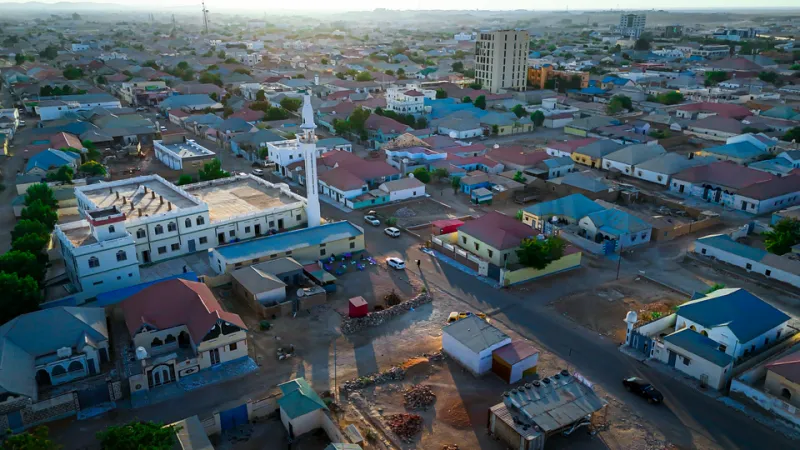
Photo: Omar Gadood, CC BY-SA 4.0, via Wikimedia Commons
A Legacy Forged Under Pressure
Leadership is rarely tested in moments of calm. It is measured, instead, in the crucible of hardship — when resources are scarce, when communities fracture, and when competing interests threaten to overwhelm a shared vision. Prophet Muhammad ﷺ understood this reality intimately. His years in Medina were not simply a period of spiritual consolidation; they were a relentless exercise in navigating crises that would have dismantled lesser communities entirely.
For American Muslims — who live as a minority faith community within one of the world's most pluralistic nations — the lessons embedded in those early years carry a striking contemporary relevance. Whether one is managing a mosque board dispute in Dearborn, Michigan, mediating a generational conflict within a South Asian family in New Jersey, or participating in local civic governance in Houston, the Prophet's approach to leadership offers a framework that is both spiritually grounded and practically actionable.
The Hijra: Rebuilding Community from the Ground Up
When the early Muslim community migrated from Mecca to Medina in 622 CE, they arrived as displaced people — economically vulnerable, socially uprooted, and politically fragile. The Prophet ﷺ did not respond to this vulnerability with passivity. Instead, he immediately undertook a series of deliberate structural decisions that stabilized the nascent community.
First among these was the institution of mu'akhat — a formal brotherhood between the Meccan emigrants (Muhajirun) and the Medinan hosts (Ansar). This was not merely a symbolic gesture. Ansari families opened their homes, shared their wealth, and integrated the newcomers into their economic networks. In doing so, the Prophet transformed a potential crisis of scarcity into an exercise in communal solidarity.
The lesson for American Muslim communities is direct. Many mosques across the United States serve congregations divided by ethnicity, language, and socioeconomic background. Arab, South Asian, African American, and convert Muslim communities often exist in parallel rather than in genuine partnership. The prophetic model of mu'akhat challenges Muslim institutions to build intentional structures of solidarity — mentorship programs, shared economic initiatives, and cross-cultural community bonds — rather than allowing those divisions to calcify over generations.
The Constitution of Medina: Diplomacy as a Spiritual Practice
One of the most remarkable documents in Islamic history is the Sahifat al-Madinah, commonly known as the Constitution of Medina. Drafted under the Prophet's ﷺ guidance, this agreement established the rights and responsibilities of the city's diverse inhabitants — Muslims, Jewish tribes, and polytheists alike. It recognized each group's autonomy, codified mutual defense obligations, and created a framework for dispute resolution.
This was not a reluctant concession to political necessity. It was a principled articulation of how a Muslim-led society could coexist with — and indeed protect — communities of differing faiths. The Prophet ﷺ did not demand religious uniformity as a precondition for civic cooperation. He demanded accountability, justice, and shared commitment to the community's wellbeing.
For American Muslims engaged in civic life — serving on city councils, participating in interfaith coalitions, or advocating for policy change — this framework is deeply instructive. Engagement with non-Muslim neighbors, colleagues, and institutions is not a compromise of Islamic identity. It is, in fact, a continuation of a prophetic tradition. The Prophet ﷺ built coalitions. He negotiated treaties. He honored agreements even when they were politically inconvenient.
American Muslim advocacy organizations would do well to study the Constitution of Medina not merely as a historical artifact but as a living model for civic engagement in a pluralistic democracy.
Managing Internal Division: The Lessons of the Hypocrites
Not every challenge the Prophet ﷺ faced came from external adversaries. The munafiqun — the hypocrites of Medina — represented a persistent internal threat. These were individuals who publicly professed Islam while privately undermining the community's cohesion. Rather than responding to this challenge with authoritarian suppression, the Prophet ﷺ exercised a form of patient, principled leadership that prioritized the community's long-term health over short-term resolution.
He continued to engage, to invite, and to maintain the integrity of the community's standards without descending into suspicion or paranoia. He trusted Allah's ultimate judgment while fulfilling his own responsibilities with clarity and consistency.
This approach holds particular relevance for American Muslim community leaders navigating internal conflicts — whether over mosque governance, ideological disagreements, or generational tensions between immigrant parents and American-born children. The prophetic response was never to silence dissent through force of personality or institutional power. It was to model integrity so consistently that the community itself could distinguish authentic commitment from performative affiliation.
Economic Hardship and the Ethics of Sufficiency
The Battle of the Trench (Khandaq) in 627 CE brought the Medinan community to the edge of economic and psychological exhaustion. The Prophet ﷺ himself participated in digging the defensive trench, famously tying stones to his stomach to suppress hunger. This image — the leader sharing in the community's deprivation rather than insulating himself from it — communicates something essential about Islamic leadership ethics.
In an era when American Muslim professionals and entrepreneurs are building considerable institutional wealth, the prophetic model of economic solidarity remains a meaningful counterweight to individualism. Zakat is obligatory, but the Prophet's example suggests that authentic leadership demands something beyond the minimum — a genuine sharing of burdens, a willingness to be visibly present in the community's struggles.
Practical Principles for Today's Muslim Leaders
Drawing these historical threads together, several leadership principles emerge that are directly applicable to American Muslim life:
Build structural solidarity, not just symbolic unity. Meaningful cross-cultural and cross-class partnerships within Muslim communities require intentional institutional design, not merely goodwill.
Engage the civic sphere with confidence. Interfaith and civic engagement is not an accommodation of secular values — it is an expression of prophetic practice.
Lead through consistency, not coercion. Internal community challenges are best addressed through integrity and patience, not institutional power.
Share in the community's burdens visibly. Leadership carries an ethical obligation of presence — to be seen, to be accountable, and to participate in the community's hardships as well as its celebrations.
The Prophet Muhammad ﷺ did not lead a community that was free from conflict, poverty, or division. He led a community through those realities with a clarity of purpose, a depth of compassion, and a strategic intelligence that continues to illuminate the path for Muslims across every generation and geography.