When the Companions Doubted: Seven Stories of Faith Crisis from the Prophet's Era—and What They Offer American Muslims Now
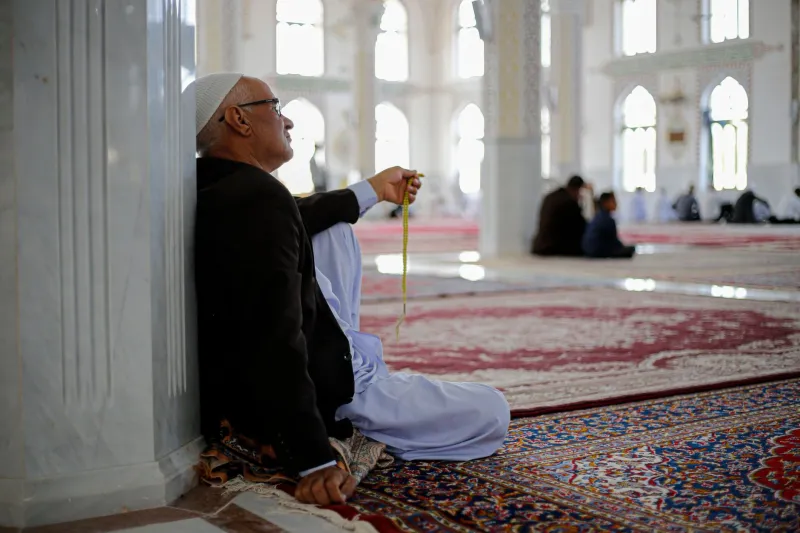
Ask many American Muslims to describe their inner spiritual life, and the answers that emerge are rarely the polished narratives of unshakeable certainty that appear in Friday sermons. They speak of distance from Allah during seasons of grief. They describe prayers that feel mechanical and hollow. They confess to questions about divine wisdom that feel too dangerous to voice aloud in a mosque. And too often, they carry these struggles in silence, convinced that a "good Muslim" would not feel this way.
The historical record of the Prophet's era tells a different story entirely.
The Sahabah—the companions of the Prophet Muhammad ﷺ—were not spiritual superheroes immune to fear, confusion, or despair. They were human beings who loved Allah and His Messenger and still, at times, found themselves lost in the dark. What made them extraordinary was not the absence of doubt but the way they navigated it, often with the Prophet's own patient guidance. Their stories are preserved precisely so that every generation of Muslims may find themselves within them.
1. Hanzalah ibn Abi Amir: The Man Who Feared He Had Become a Hypocrite
Hanzalah al-Usayyidi came to Abu Bakr in a state of near-panic, convinced that his faith had collapsed. He described the contrast between his inner life during gatherings with the Prophet ﷺ—vivid awareness of paradise and hellfire, a heart fully alive—and his state at home with his family, where that intensity faded completely. "Hanzalah has become a hypocrite," he told Abu Bakr, who admitted he felt the same fluctuation.
When they brought this concern to the Prophet ﷺ, his response was neither dismissive nor alarmed. He told them: "By Him in Whose Hand is my soul, if you were to remain always in the state in which you are when you are with me... the angels would shake hands with you in your beds and in your roads. But, O Hanzalah, there is a time for this and a time for that" (Muslim).
For American Muslims today: The spiritual intensity of Ramadan, a powerful lecture, or a moving congregational prayer is not meant to be the permanent baseline of one's faith. Fluctuation is not failure. The Prophet ﷺ normalized the rhythm of spiritual highs and ordinary days without treating the ordinary as evidence of hypocrisy.
2. Umar ibn al-Khattab: Doubt at the Treaty of Hudaybiyyah
Few companions are more associated with unwavering conviction than Umar ibn al-Khattab. Yet at the Treaty of Hudaybiyyah in 628 CE, he approached the Prophet ﷺ in visible distress, questioning why the Muslim community was accepting terms that felt humiliating and unjust. "Are you not truly the Messenger of Allah?" he asked—a question that, in its raw desperation, bordered on spiritual crisis.
The Prophet ﷺ did not rebuke Umar for asking. He answered him directly, with certainty and calm. The treaty that Umar doubted was later described by the Quran itself as "a clear victory" (48:1).
For American Muslims today: When divine wisdom seems absent from the circumstances of one's life—illness, injustice, unanswered prayers—asking hard questions is not apostasy. Umar asked. The Prophet ﷺ answered. That exchange is a model for honest engagement with religious leadership and with Allah Himself.
3. The Companions During the Revelation's Pause (Fatrat al-Wahy)
After the initial revelation in the Cave of Hira, divine communication ceased for a period. The Prophet ﷺ himself experienced profound anguish during this silence, fearing he had been abandoned by Allah. His companions watched their beloved teacher suffer. Some faced their own secondary crisis: if the Prophet was uncertain, what did that mean for them?
The eventual revelation of Surah Ad-Duha (93:3)—"Your Lord has not forsaken you, nor has He become displeased"—was an answer not only to the Prophet's distress but to everyone who has ever felt spiritually abandoned.
For American Muslims today: The silence of Allah is not the absence of Allah. Periods of spiritual dryness, unanswered supplication, or emotional numbness during worship are experiences shared even by the best of creation. Surah Ad-Duha was revealed precisely for such moments.
4. Ka'b ibn Malik: Fifty Days of Communal Isolation
Ka'b ibn Malik was among three companions who, without valid excuse, failed to join the Prophet ﷺ on the expedition to Tabuk. The Prophet ﷺ instructed the entire Muslim community to shun them for fifty days—no greetings, no conversation, no acknowledgment. Ka'b described the earth feeling vast yet suffocating. He wept. He wondered whether he would ever be forgiven.
His account in Sahih al-Bukhari is among the most emotionally raw testimonies in the entire hadith literature. His faith did not evaporate under pressure; it was tested in fire. And when his repentance was accepted, the relief was so overwhelming that he wept until he could no longer see.
For American Muslims today: Spiritual consequences for genuine failures are real, and the path through them requires honest accountability—not performative self-flagellation but sincere tawbah (repentance). Ka'b's story also illustrates that communal belonging, once strained, can be restored.
5. Mistah ibn Uthatha and the Slander of Aisha: A Community's Test of Judgment
When Aisha (may Allah be pleased with her) was falsely accused of misconduct during the incident known as the Ifk, the entire Muslim community was thrown into spiritual disarray. Even close companions spread or entertained the rumor. Mistah ibn Uthatha—a man whose living expenses Abu Bakr regularly covered—was among those who repeated the slander.
The Quran's response in Surah An-Nur (24:12) was direct: "Why, when you heard it, did not the believing men and believing women think good of one another and say, 'This is an obvious falsehood'?" The entire community was held accountable for a collective failure of charitable assumption.
For American Muslims today: In an era of social media rumor cycles and intra-community disputes, this Quranic question remains searingly relevant. Faith crises are sometimes not about theology but about the moral failures of religious communities—and the Quran does not excuse them.
6. Abdullah ibn Masud: Learning to Sit with Incomplete Knowledge
Abdullah ibn Masud was one of the most learned companions, and yet he was known for saying, "Whoever knows a thing, let him say it, and whoever does not know, let him say: Allah knows best." This was not false humility—it was a deliberate posture cultivated in the presence of the Prophet ﷺ, who modeled the same intellectual honesty.
Ibn Masud understood that faith does not require an answer to every question. Certainty about Allah's existence, His mercy, and the truth of the Prophet's message was sufficient. The rest could be held with open hands.
For American Muslims today: Young American Muslims confronting scientific, philosophical, or textual questions about Islam do not need to choose between intellectual honesty and faith. The prophetic tradition itself modeled comfort with partial knowledge.
7. The Ansar's Anxiety About Favoritism After Hunayn
Following the Battle of Hunayn, the Prophet ﷺ distributed war spoils heavily toward recently converted Qurayshi leaders, giving little to the Ansar—his loyal supporters from Medina. Murmuring broke out among them. Some felt overlooked and undervalued after years of sacrifice.
The Prophet ﷺ gathered them privately, acknowledged their feelings, and reminded them of what they had been given that no material goods could match: his presence, his love, and his intercession. "Are you not satisfied that the people go back with sheep and camels while you go back with the Messenger of Allah?" The Ansar wept and were satisfied.
For American Muslims today: Faith communities can generate real hurt—through unequal treatment, institutional favoritism, and the sense that one's contributions go unrecognized. The Prophet's response was not to dismiss those feelings but to address them directly and to reframe what truly mattered.
Closing Reflection: Normalizing the Struggle
The Sahabah were not exempt from doubt, fear, confusion, or spiritual exhaustion. They were, however, surrounded by a Prophet who took their inner lives seriously. American Muslims today may not have that physical proximity, but they have the preserved record of his responses—responses that were invariably characterized by patience, directness, and an absolute refusal to shame those who struggled.
Faith crises are not evidence of weak Islam. They are, in many cases, evidence of a faith taken seriously enough to hurt. The prophetic tradition not only anticipated such struggles—it prepared us for them.